
Payment Automation That Keeps Cash Flow Moving
Payment automation removes manual steps from how payments are collected and tracked. Invoices are sent automatically, payment links are delivered at the right time, and payment status updates as soon as transactions are completed.
Instead of chasing payments or checking systems manually, teams can rely on automation to keep cash flow consistent and predictable.
When Getting Paid Depends on Manual Follow-Up
Getting paid on time often has less to do with customers refusing to pay and more to do with how the payment process is handled. In many businesses, invoices are sent manually, reminders are inconsistent, and payment status lives in separate systems.
Teams spend time checking who has paid, who hasn’t, and whether a reminder was already sent. Follow-ups rely on memory or spreadsheets, and overdue payments quietly stack up. As volume increases, this manual approach becomes harder to control and easier to get wrong.
Customers experience this too. Payment requests arrive late, links are hard to find, or reminders feel random. What should be a simple transaction turns into friction that delays cash flow and creates unnecessary back-and-forth.
When payment collection isn’t structured, money slows down even when customers are willing to pay.
Turning Payment Collection Into a Predictable Process
Fixxable’s payment automation removes guesswork from getting paid by structuring the entire process. Payment requests, invoices, and reminders are triggered automatically based on timing or actions instead of manual checks.
Payment links are delivered at the right moment, making it easy for customers to complete transactions without searching for details or waiting for follow-up. As payments are made, status updates immediately so teams always know what’s complete and what still needs attention.
This creates consistency. Payments are requested the same way every time, reminders follow a clear pattern, and overdue payments are visible instead of hidden. Teams spend less time managing transactions and more time focusing on the work that generates revenue.
By automating collection and tracking, Fixxable helps businesses maintain healthier cash flow without adding administrative burden.
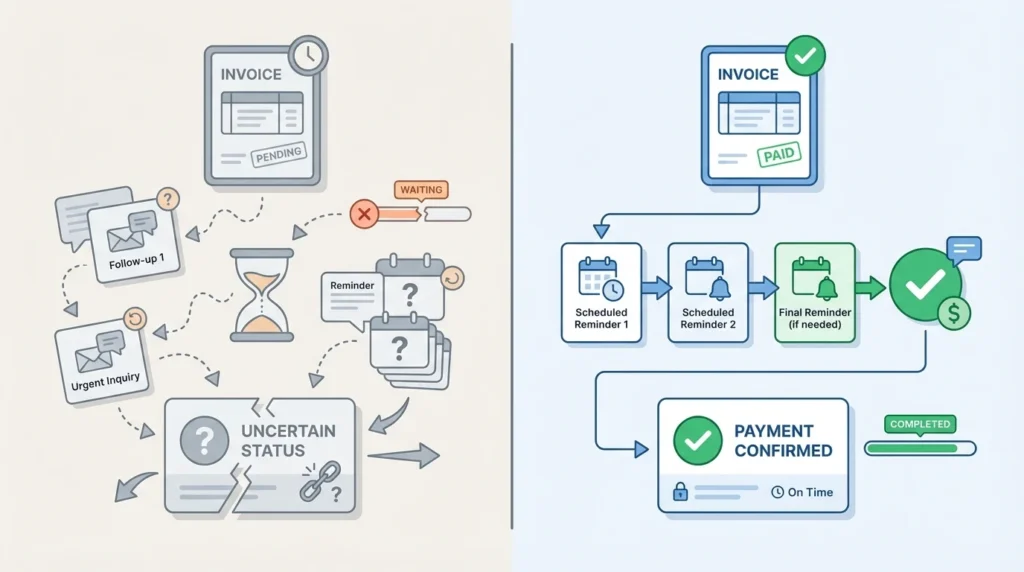
Key Payment Automation Capabilities
This payment automation in Fixxable helps automate everyday business actions by intelligently connecting your systems and workflows.
Payments Are Requested at the Right Time
Payment requests are triggered automatically based on actions or timing, so invoices don’t sit unsent or arrive late.
Customers Don’t Need to Chase Details
Clear payment links are delivered directly, removing friction caused by missing invoices, attachments, or unclear instructions.
Follow-Ups Become Consistent
Reminders follow a defined pattern instead of depending on someone remembering to send them.
Payment Status Is Always Clear
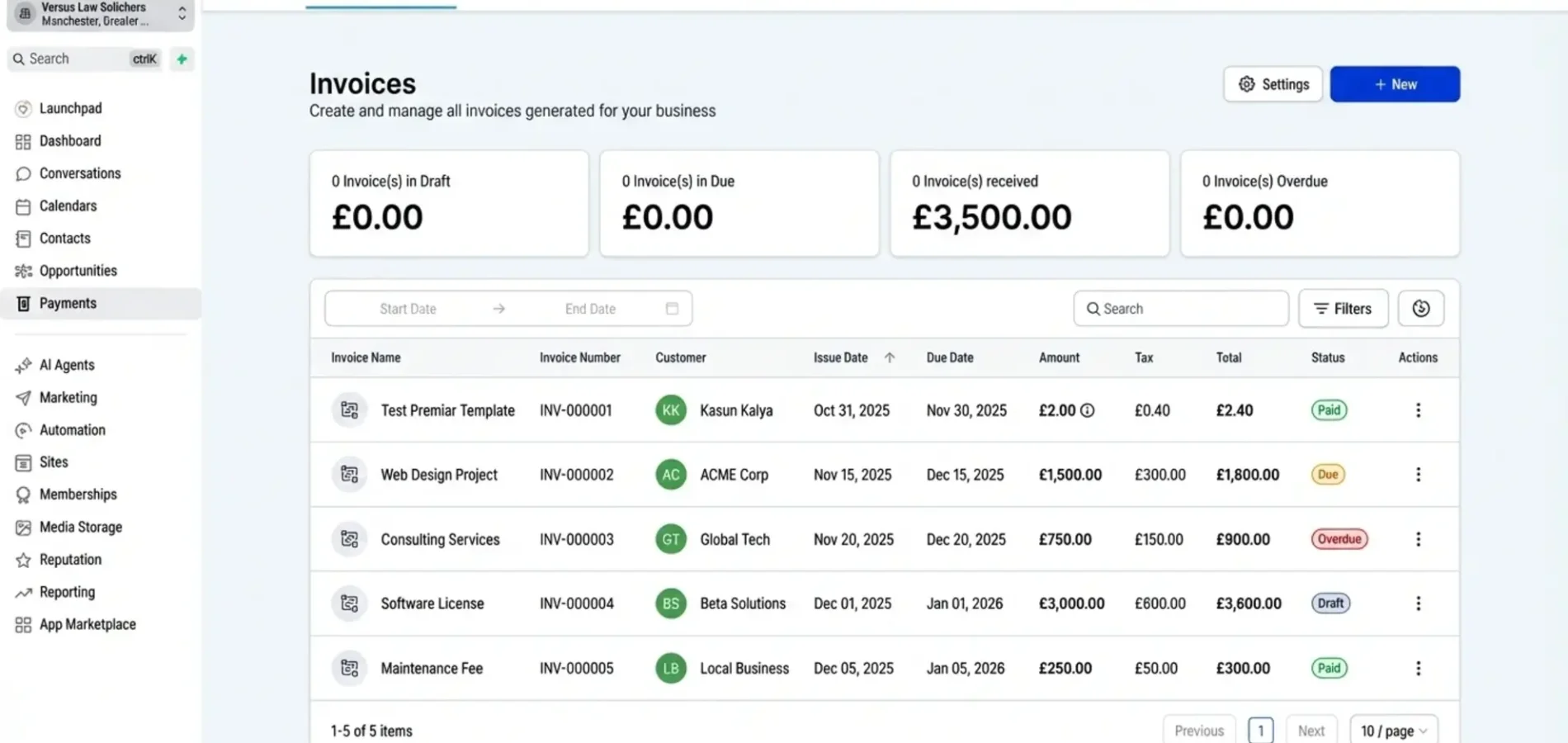
Teams can instantly see what’s paid, pending, or overdue without checking multiple systems.
Cash Flow Becomes Easier to Forecast
With predictable payment behaviour, businesses gain clearer insight into incoming revenue instead of reacting to surprises.
How Payment Automation Runs Day to Day
Payment automation fits into existing workflows and runs continuously as transactions occur.
Payment Requests Trigger Automatically
Invoices or payment links are sent when an action happens or a condition is met, without manual checks.
Payments Update Status in Real Time
As soon as a customer completes payment, the status updates automatically so teams don’t need to verify manually.
Outstanding Payments Stay Visible
Unpaid or overdue items remain clearly marked, making it easy to prioritise follow-up without searching.
Collect Payments Without Chasing
Automate invoices, reminders, and status updates so payments move forward without manual follow-up.
How Payments Are Handled in Real Scenarios
Payment automation proves its value during everyday transactions — when invoices are sent, payments are made, and follow-ups are needed without manual checks.
Payment Requests Are Sent Automatically
Invoices or payment links are sent as soon as a required action is completed. Customers receive payment details at the right moment without manual sending or reminders.
Payments Are Confirmed Immediately
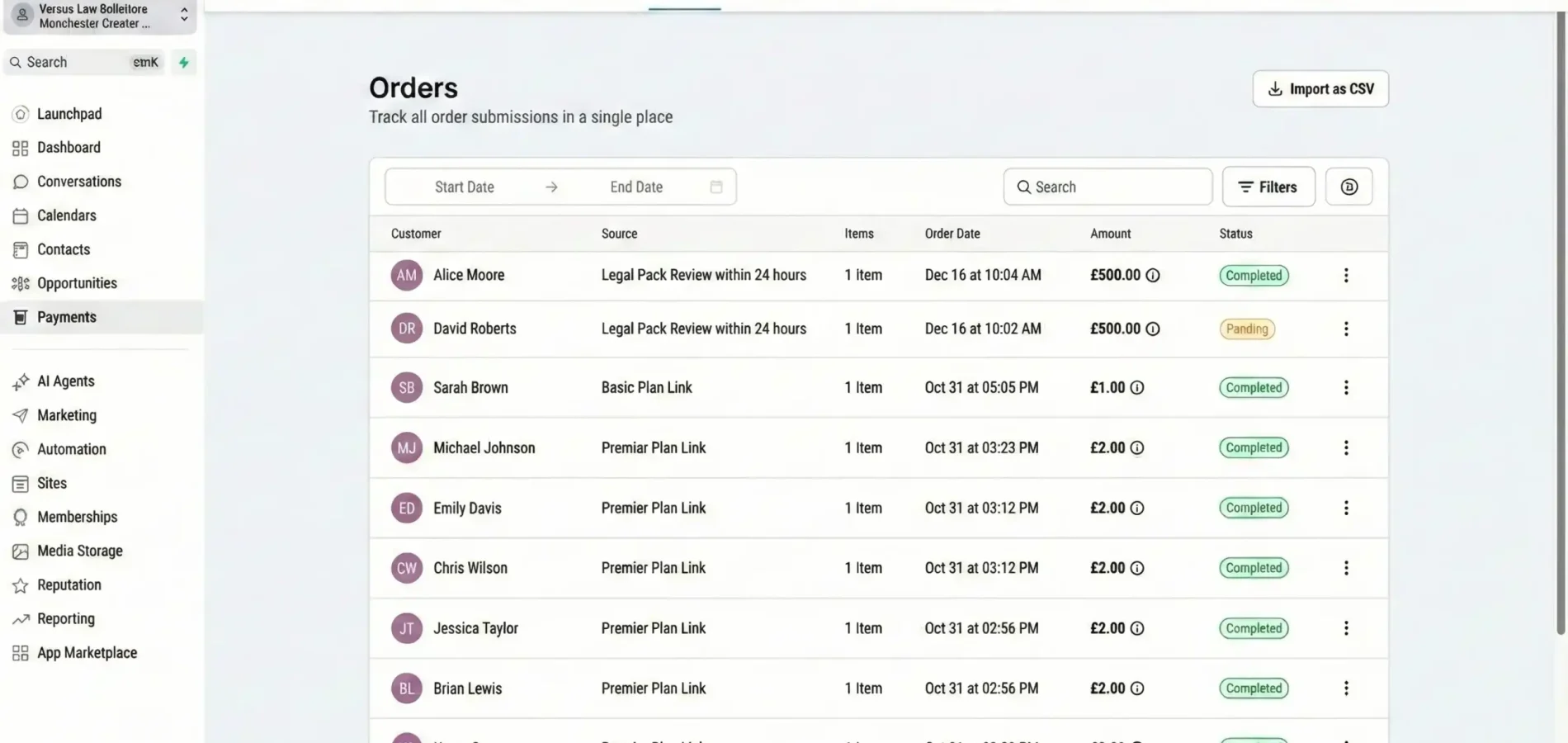
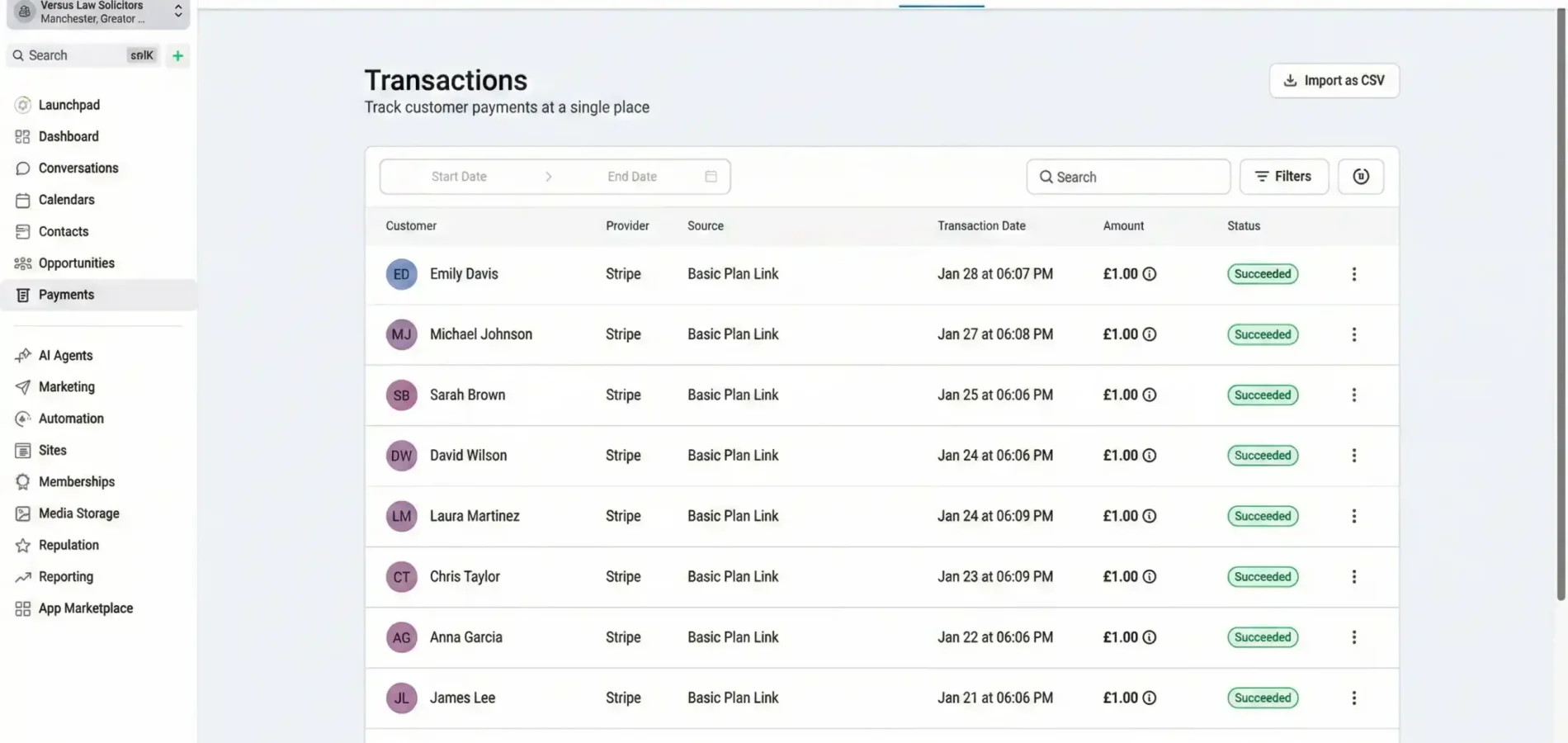
Once a customer pays, confirmation is recorded automatically. This removes the need to reconcile transactions or double-check payment records.
Records Stay Linked and Accessible
All payment activity is stored alongside the related customer or transaction. Teams can quickly review payment history without searching through separate systems.
Payment Status Is Always Clear
Teams can instantly see whether a payment is pending, completed, or overdue. No switching tools, no checking emails, and no uncertainty.
Unpaid Items Are Easy to Identify
Outstanding payments remain clearly visible so follow-ups can be prioritised. Teams know exactly what still needs attention at a glance.
Common Questions About Payment Automation
Can payment automation requests be sent automatically after an action?
Yes. Payment requests can trigger based on actions or timing, so invoices go out at the right moment without manual checks.
How do we know which payments are overdue?
Payment status is visible in one place, making it easy to see what’s paid, pending, or overdue.
Do reminders send automatically?
Yes. Reminders follow a defined pattern so follow-ups happen consistently without relying on memory.
What happens when a payment is completed?
Status updates immediately, reducing the need for reconciliation or confirmation emails.
Is this suitable for higher payment volumes?
Yes. Automation scales without adding administrative work as transaction volume increases.
Make Payment Collection Predictable
Request, track, and confirm payments automatically with less effort.