

Published on: March 09, 2026
What Is a sales pipeline and how automation makes it effortless
A sales pipeline is the backbone of any organised sales process. Without one, your team is essentially guessing — chasing leads with no clear system, missing follow-ups, and leaving revenue on the table. With one, every prospect has a defined path from first contact to paying customer.
Yet having a pipeline is only half the battle. The businesses pulling ahead today are not just tracking deals — they are automating the repetitive work that slows everything down. This guide explains what a sales pipeline is, how each stage works, and exactly how automation turns a manual, time-consuming process into a consistent revenue engine.
What is a sales pipeline?
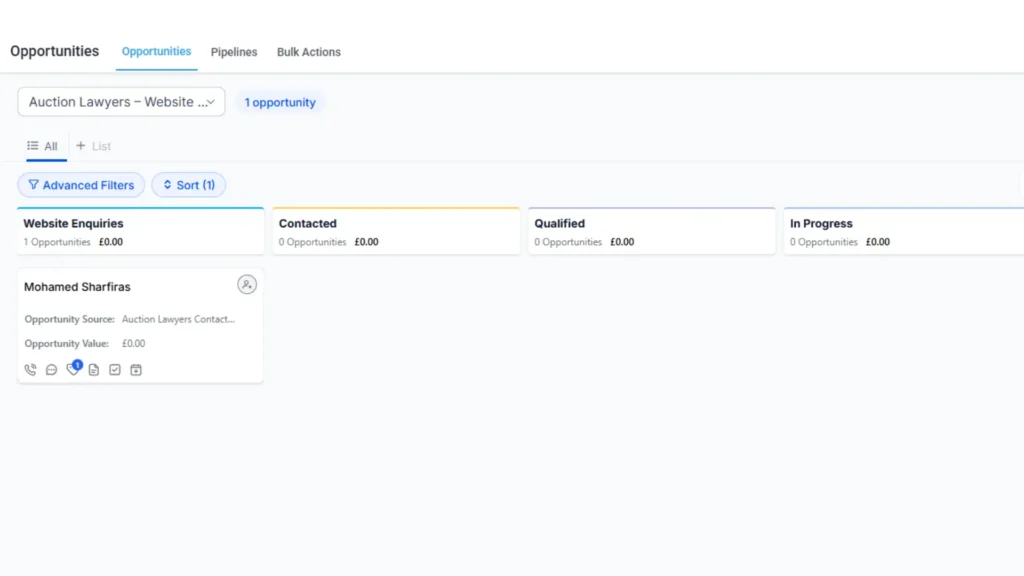
A sales pipeline is a visual, stage-by-stage representation of every deal your business is actively working on. It shows where each prospect sits in the buying journey — from the moment they first make contact with your business to the point they become a customer.
Think of it as a live map of your revenue. At any given moment, you can see which deals are progressing, which are stuck, and which need immediate attention. This kind of clarity is particularly valuable for small and growing businesses, where wasted time on cold leads or missed follow-ups has a direct impact on the bottom line.
It is worth noting that a sales pipeline is not the same as a sales funnel. A funnel represents the customer’s perspective — the journey from awareness to purchase. A sales pipeline represents your team’s actions — the specific steps you take to move a prospect from one stage to the next.
The main stages of a sales pipeline
While every business is slightly different, most sales pipelines follow a similar structure. Understanding these stages is the foundation of effective pipeline management.
- Prospecting: Identifying potential customers through outreach, referrals, ads, or inbound enquiries.
- Lead qualification: Assessing whether a prospect has the need, budget, and authority to buy. This is where low-quality leads are filtered out early.
- Meeting or demo: Presenting your solution, addressing pain points, and demonstrating value.
- Proposal: Sending a formal offer with pricing, scope, and terms tailored to the prospect.
- Negotiation: Handling objections, adjusting terms, and moving toward agreement.
- Closing: Finalising the deal and bringing the customer on board.
- Post-sale: Onboarding, relationship maintenance, and identifying upsell or cross-sell opportunities.
Each stage should have a clear set of actions and criteria that must be met before a deal moves forward. This is where Fixxable’s automation features become genuinely useful — by automating the triggers and tasks at each stage, your team always knows exactly what needs to happen next.
Why pipeline management matters for your business
Poor pipeline management is one of the most common — and most avoidable — reasons businesses miss their revenue targets. When deals are tracked in spreadsheets, scattered inboxes, or purely from memory, things fall through the cracks. A prospect who was interested last week goes cold because nobody followed up. A proposal sits unanswered because there was no automatic reminder.
Effective pipeline management solves all of this. It gives your sales team direction, keeps every deal visible, and makes forecasting genuinely reliable. When you know exactly how many deals are in each stage and how long they typically take to close, you can predict monthly revenue with real confidence.
For small businesses especially, this clarity is transformative. Our guide on how business automation saves hours every week explores this in depth — the principle applies directly to sales teams spending time on manual pipeline updates instead of actually selling.
Key pipeline management metrics to track
To keep your pipeline healthy, monitor these five metrics regularly:
- Win rate: The percentage of deals that convert into customers. A declining win rate signals a problem with lead quality or the sales process.
- Sales cycle length: How long it takes a lead to move from first contact to close. Longer cycles mean slower revenue.
- Deal age: How long individual deals have been sitting in each stage. Stagnant deals need either action or removal.
- Pipeline coverage: The total value of deals in progress compared to your revenue target. You need sufficient coverage to feel confident about hitting goals.
- Conversion rate by stage: Where prospects drop off. Identifying the leakiest stage tells you exactly where to focus improvement.
Smart automation that keeps every deal moving forward
Stop chasing leads manually. Fixxable automates your entire sales pipeline — from first contact to close — so nothing slips and revenue stays predictable.
How sales automation makes the pipeline effortless
This is where the real transformation happens. Sales automation does not replace your team — it removes the repetitive, administrative tasks that slow them down, so they can focus on building relationships and closing deals.
Here is what a properly automated sales pipeline looks like in practice:
Automatic lead capture
Every lead who fills in a web form, responds to an ad, or books a call is automatically entered into your pipeline — assigned to the right team member, placed in the correct stage, and added to a nurture sequence without anyone lifting a finger. There is no manual data entry, no risk of a lead being forgotten in a spreadsheet, and no delay in the first follow-up.
This is especially powerful when combined with automated follow-up sequences. As we cover in our article on using automation to chase clients effectively, the speed of the first response has a direct impact on whether a lead converts — and automation makes instant response the default.
Automated follow-ups and reminders
Sales automation eliminates the mental load of remembering who to follow up with and when. When a prospect opens a proposal, a task is created automatically for the rep. When a deal sits in a stage for too long without movement, the system flags it. When a proposal goes unread for three days, a polite follow-up email goes out automatically.
This kind of consistent, timely communication is what keeps deals alive. Automated SMS and appointment reminders work on the same principle — removing the manual effort behind every touchpoint so your pipeline keeps moving even when your team is at capacity.
Stage-based task triggers
When a deal moves from one stage to the next, the right actions happen automatically. Moving a lead to the proposal stage can trigger a task for the relevant team member to prepare pricing, schedule a calendar invite, and send a confirmation email — all without anyone manually coordinating any of it.
This kind of stage-based automation makes your pipeline management genuinely consistent. Every deal follows the same proven process, regardless of who is handling it.
Real-time pipeline visibility
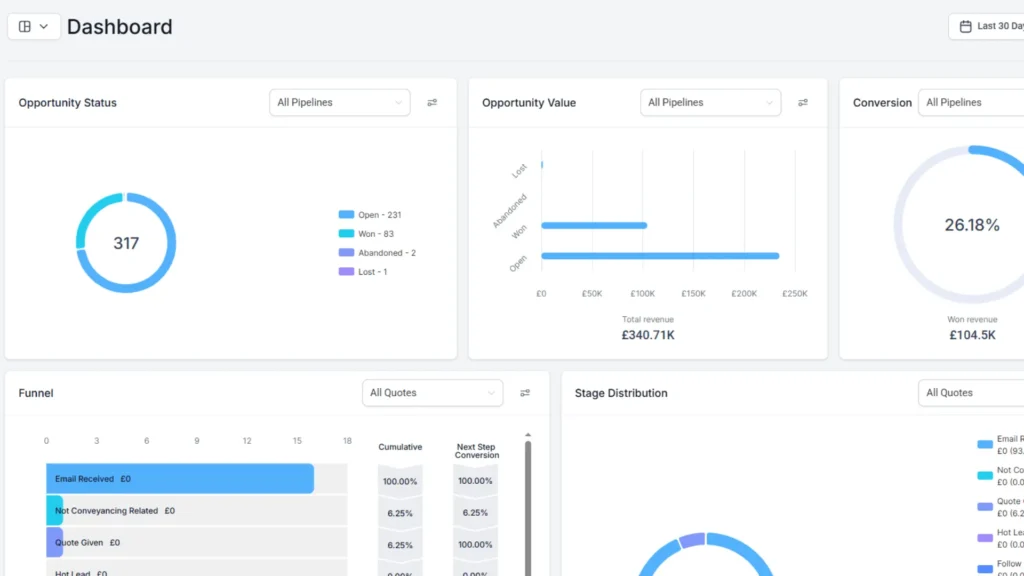
With sales automation in place, your pipeline dashboard is always accurate. Activity is logged automatically — calls, emails, meetings — so deal stages update in real time without relying on your team to manually update records. Managers get instant visibility into pipeline health, and forecasting becomes a data-driven exercise rather than an educated guess.
Sales pipeline vs sales funnel: what's the difference?
This distinction comes up frequently and is worth understanding clearly before building your pipeline.
A sales funnel shows the customer’s journey from first awareness of your business through to making a purchase. It is shaped like a funnel because the number of people narrows at each stage — many hear about you, fewer show interest, fewer still make a decision, and a portion actually buy.
A sales pipeline shows your team’s process — the specific actions your salespeople take to guide each prospect forward. It tracks what is happening right now with every active deal.
Both are useful, but they answer different questions. The funnel tells you where you’re losing people. The pipeline tells you what your team needs to do about it.
How to build a healthy sales pipeline from scratch
If you are building a sales pipeline for the first time, the process is simpler than it might appear. Here are the steps that matter most:
- Define your ideal customer. Know exactly who you are targeting — their pain points, budget, decision-making authority, and buying timeline. Every lead that does not fit this profile wastes your pipeline’s capacity.
- Map your real sales stages. Build stages that reflect how your business actually sells, not a generic template. Keep stage names clear and simple so everyone on the team interprets them the same way.
- Set actions and criteria for each stage. Every stage needs specific tasks (what the rep must do) and clear criteria for progression (what must be true before the deal advances).
- Nurture consistently. Most prospects will not buy on first contact. Use email sequences, follow-up calls, and valuable content to stay front of mind without being intrusive.
- Review and clean regularly. Remove stalled deals, update stages accurately, and track your key metrics. A pipeline full of dead leads skews your forecasting and demoralises the team.
- Automate the repetitive work. Once your process is defined, automate the tasks that repeat at every stage — follow-ups, reminders, stage triggers, and reporting.
If you want to see what this looks like across different industries, our industry-specific automation solutions show how the same pipeline principles apply whether you are in professional services, trades, healthcare, or retail.
Common sales pipeline mistakes that cost you revenue
Even businesses with a pipeline in place often make avoidable errors that limit its effectiveness:
- Too many dead deals: Keeping unqualified or stalled leads in the pipeline inflates your numbers and makes forecasting unreliable. Remove deals that have gone cold.
- No defined exit criteria: If there are no clear conditions for moving a deal forward, reps will move deals based on optimism rather than evidence.
- Manual updates only: A pipeline that depends entirely on reps updating it manually will always lag behind reality. Automation keeps it current.
- Ignoring post-sale opportunities: The pipeline should not end at closing. Upselling and cross-selling to existing customers is significantly cheaper than acquiring new ones.
Turn your sales pipeline into a revenue machine
A well-built sales pipeline gives you control, clarity, and confidence over your entire sales process. But it only reaches its full potential when the manual work is removed. Sales automation handles the follow-ups, the reminders, the data entry, and the stage transitions — so your team can focus entirely on the conversations that close deals.
If you are ready to see how automation can transform your pipeline from a tracking tool into a genuine growth engine, book a free demo with Fixxable and we will show you exactly what is possible for your business.
Or if you have a specific question about how this would work for your setup, get in touch with our team — we are always happy to talk through the options.
Smart automation that keeps every deal moving
Fixxable helps small businesses eliminate manual pipeline admin with automated follow-ups, stage triggers, and real-time deal tracking. No leads fall through the cracks — your pipeline stays active and your team stays focused on closing.