
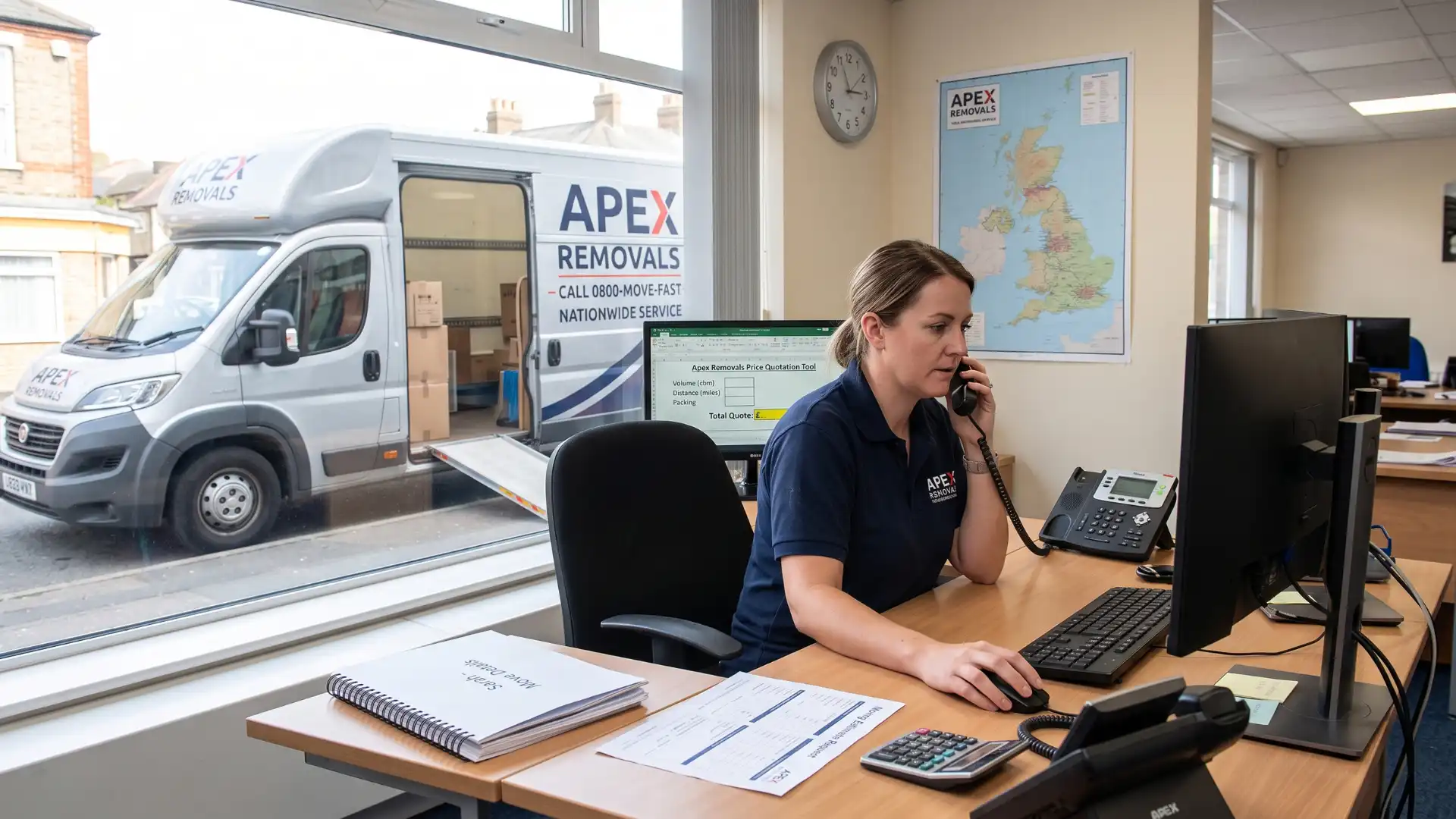
How removal companies can win more bookings with faster quote responses
When someone requests a removal quote, they are often comparing more than one company. Faster quote responses help you stay in the conversation while the customer is still actively deciding, but speed only works when the process keeps moving through survey, quote, deposit and booking without gaps.
This guide looks at how instant quote acknowledgement, a well-built follow-up sequence and a clear booking confirmation workflow work together to turn more removal enquiries into confirmed, paid jobs.
Why faster quote responses matter so much in removals
People comparing removal companies are often working to a fixed deadline: a completion date, a tenancy ending or another moving-day constraint. A prompt, organised response helps while the customer is still gathering options. Speed is useful, but it should never come at the cost of a clear scope, realistic availability or an accurate quote.
Speed also signals something beyond convenience. A prompt, well-organised reply gives the customer confidence that moving day itself will be handled with the same care.
Start with an instant, automated acknowledgement
The first message a customer needs is not the quote itself. It is confirmation that their enquiry has actually arrived and someone is looking at it. An automated acknowledgement sent the moment an enquiry lands — by web form, phone, email or WhatsApp — closes that gap immediately, even if a survey still needs to be booked before a full price can be given.
A useful acknowledgement message is short and specific: it confirms what was received, gives a realistic timeframe for the next step, and tells the customer how to get in touch if anything is urgent. Sent within seconds rather than hours, it keeps a removal company in contention while other quotes are still being compared, without anyone in the office needing to stop what they’re doing to send it manually.
Where removal enquiries usually stall after that first message
Once the initial acknowledgement is out, most remaining delays happen before anyone finishes working out a price.
- Survey booking (video or in-home) is arranged manually, adding days before a quote can even be prepared.
- The quote itself is typed up from scratch each time, rather than generated from a standard format.
- Enquiries from different channels sit in different inboxes, so nobody has one clear view of what’s still waiting on a reply.
- Once a quote is sent, there is no consistent process for checking whether the customer received it or has questions.
None of this is caused by a lack of effort. It happens because enquiry handling relies on someone remembering to act at each stage, rather than a workflow that carries each enquiry forward automatically.
Choose a survey method that keeps the process quick
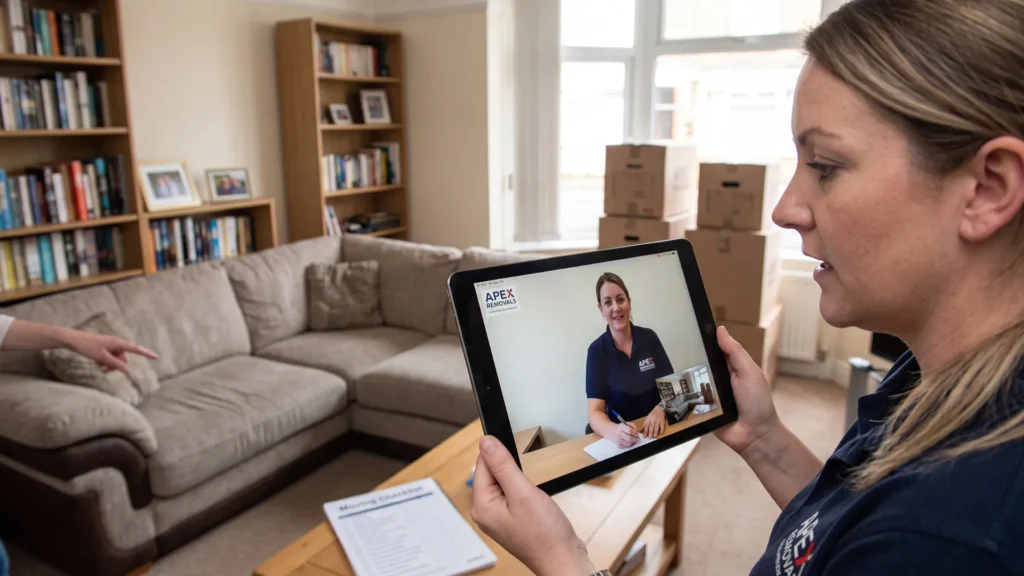
For some smaller or straightforward moves, an online inventory or video survey may provide enough information to prepare a useful quote. Larger, longer-distance or more complex moves may benefit from a more detailed video or in-home survey, especially where volume, parking, stairs or access could affect the job. The right method depends on the move and the removal company’s quoting process.
Whichever method a removal company uses, moving it into the enquiry workflow as a scheduled step — with an automatic confirmation and reminder ahead of the appointment — keeps the total time from first contact to quote as short as possible.
What a fast quote still needs to get right
A quick quote that leaves the customer confused will not convert any faster than a slow one. A useful removal quote should clearly show:
- The moving dates, addresses and agreed scope of work
- What is included, such as packing materials, dismantling and appliance disconnection
- Whether the figure is an estimate or a fixed-price quote, and what assumptions it is based on
- Any exclusions, access issues or additional charges that could apply
- Insurance cover and payment terms, including any deposit required
Being upfront about which type of quote a customer is receiving, and what could change it, removes one of the most common reasons people hesitate before booking.
Build a follow-up sequence around how people actually move house
A removal quote does not sit in the same kind of limbo as a general trade quote. It is almost always tied to a specific moving date, which gives a follow-up sequence a natural, honest structure rather than a generic chase.
- Straight after the enquiry: an instant acknowledgement confirming receipt and next steps.
- After the survey is booked: a confirmation message, plus a reminder shortly before a video or in-home visit.
- Shortly after the quote is sent: a short check-in to confirm it arrived and offer to answer questions, particularly if the customer’s preferred date is in a busy period.
- If there is still no response: one further low-pressure message, then the enquiry can be archived without more manual chasing.
- If a quote is accepted but the deposit hasn’t been paid: an automatic reminder, rather than a phone call added to someone’s to-do list.
Each stage only needs to fire when the previous one hasn’t produced a response, and it should stop the moment the customer replies, accepts or declines. That keeps the sequence useful rather than repetitive, and means office staff aren’t deciding from scratch what to send and when for every enquiry.
A CRM system built to organise enquiries and follow-ups keeps every enquiry, whichever channel it arrived on, in one place, so it’s clear at a glance which stage of the sequence each customer is at. Automated WhatsApp and SMS messages then handle the sending itself, on schedule, without relying on someone remembering.
Turn an accepted quote into a confirmed booking
Winning the enquiry is only half the job. A quote that is accepted verbally or by email still needs to become a locked-in booking, with a date and a deposit, before it can be scheduled with any confidence.
A simple booking confirmation workflow closes that gap:
- The moment a quote is accepted, an automatic deposit request goes out — rather than during a follow-up call the next day.
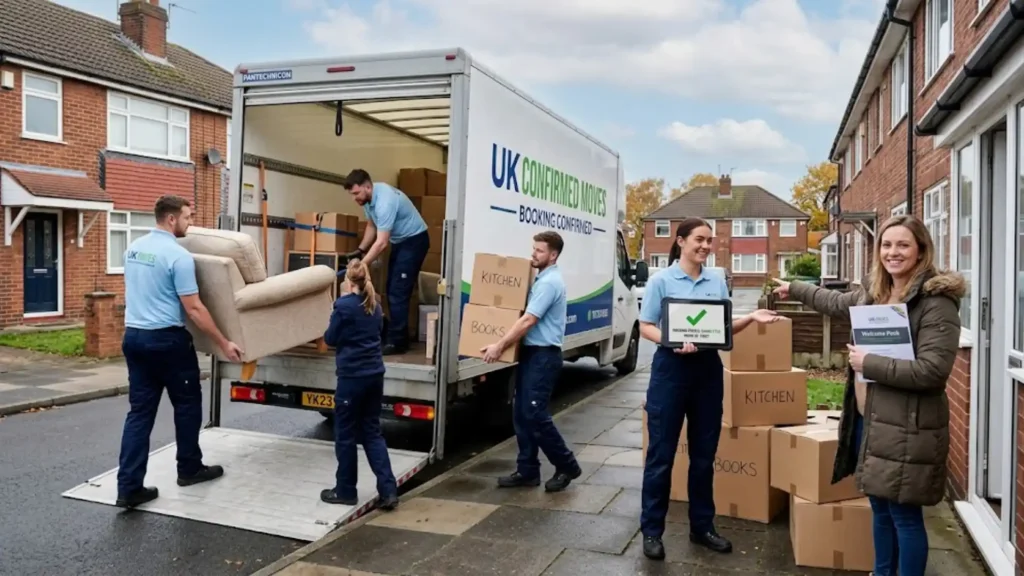
- Once the deposit is paid, a booking confirmation is sent automatically, confirming the date, address and what happens next.
- The job is then scheduled against crew and vehicle availability, so office staff aren’t juggling a separate confirmation step by hand.
Sending the deposit request immediately, through payment automation, closes the window in which a customer could still change their mind or accept a competing quote instead. Automatic invoicing and payment tracking also mean office staff aren’t chasing outstanding deposits by hand during the busiest weeks of the year, and crew and vehicle availability can be managed through a shared booking calendar instead of a wall planner or spreadsheet.
Manage peak season without letting response times slip
Removal businesses can face sharp spikes in enquiry volume around popular moving periods, school holidays and busy completion dates. Manual processes are usually the first thing to strain when volume rises: acknowledgements wait, survey bookings stack up, and follow-ups are easier to miss.
Automating each stage, from the first acknowledgement through to the booking confirmation, keeps response times consistent whatever the week’s enquiry volume, without needing extra office staff purely to keep pace with demand.
Struggling to keep on top of enquiries during your busiest months?
Fixxable brings enquiry capture, quoting, follow-up sequences, booking confirmations and payments for removal companies into one connected system, so nothing waits on someone remembering to follow it up.
Keep customers informed after the booking is confirmed
A good booking confirmation workflow doesn’t stop once the deposit lands. A reminder in the days before moving day, a short update once the crew is on the way, and a thank-you message once the job is complete all reduce the number of “are we still on for Thursday” calls — and they make a removal company feel organised at exactly the moment a customer is most anxious about their move. A thank-you message is also a natural, low-pressure moment to ask for a review.
Common questions about faster removal quoting
What should an automated quote acknowledgement include?
It should confirm the enquiry was received, give a realistic timeframe for the next step (such as booking a survey), and tell the customer how to get in touch if their date is urgent. It is not a substitute for the full quote, just confirmation that someone is on it.
How many follow-up messages should a removal company send after a quote?
Enough to check the quote arrived and offer help, without repeating the same message. A short check-in shortly after sending, followed by one further low-pressure message if there’s still no reply, is usually sufficient — the sequence should stop as soon as the customer responds.
How does a booking confirmation workflow work?
Once a quote is accepted, a deposit request goes out automatically. When the deposit is paid, a confirmation message follows straight away, and the job moves into scheduling against crew and vehicle availability.
What's the difference between an estimate and a fixed-price removal quote?
An estimate can change if the volume, access, dates or scope turn out to be different from the information supplied. A fixed-price quote is intended to hold for the agreed scope, subject to the company’s stated terms and any changes you request. The important point is to make the basis of the price clear before the customer books.
Is a video survey accurate enough for most moves?
It can be, depending on the property, the size of the move and the information the customer can provide. Straightforward moves may be suitable for a video or inventory-based assessment, while larger or more complex jobs may need a detailed in-home survey before a firm price is given.
The British Association of Removers (BAR) is the UK removals trade association. Its consumer guidance emphasises clear, fair quotations and transparent communication from BAR members, which is a useful benchmark when designing a fast quoting workflow.
British Association of Removers (BAR) — moving-home consumer guidance
Ready to respond to every removal enquiry faster?
Fixxable helps UK removal companies acknowledge enquiries instantly, run a proper follow-up sequence, and confirm bookings automatically once a deposit lands — without adding admin.