
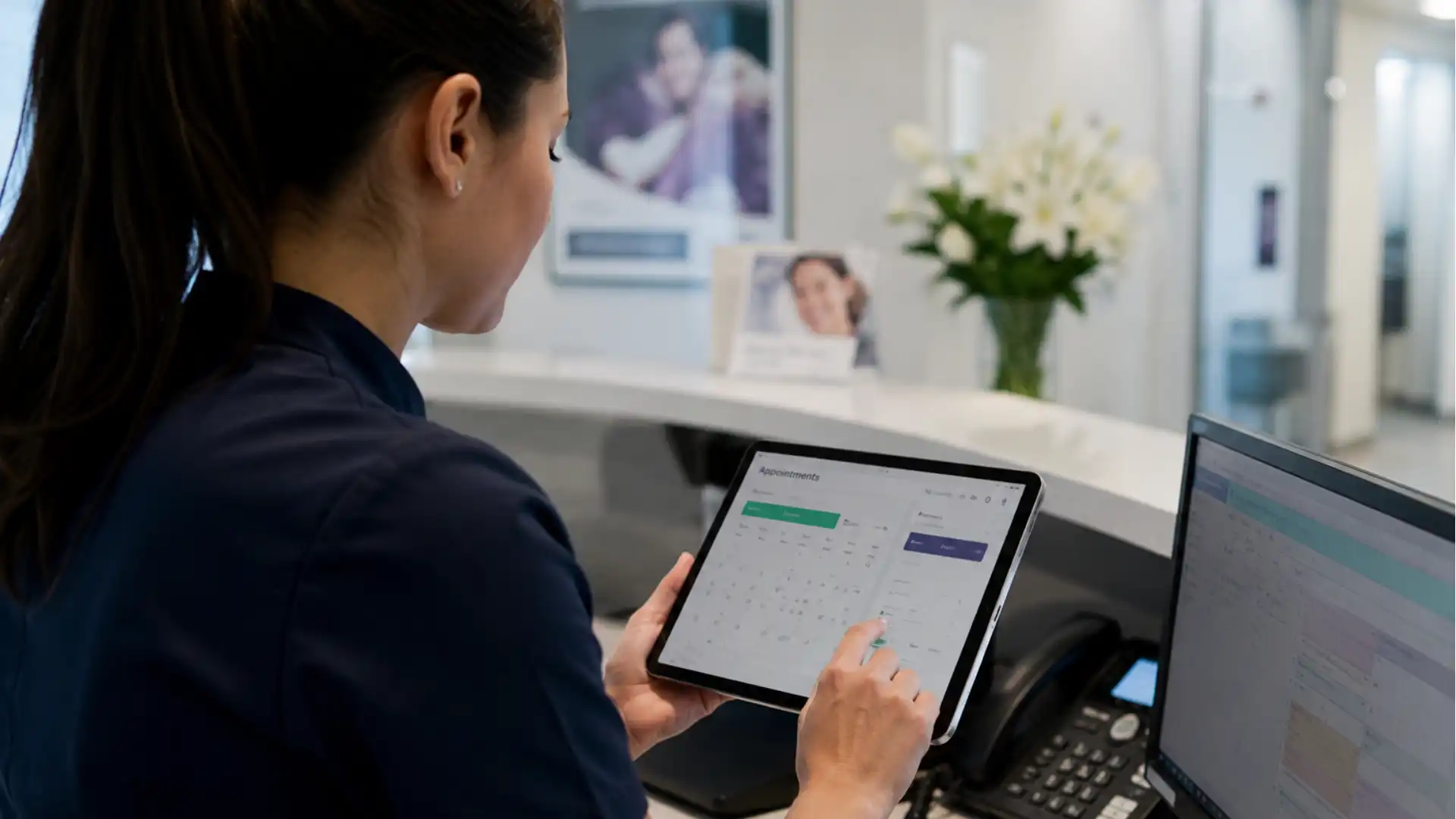
How dental appointment booking automation transforms your practice
Dental appointment booking automation is changing the way UK practices manage their diaries — and the results speak for themselves. Whether you run an NHS practice, a private clinic, or a mixed service, the way patients book, confirm, and reschedule their visits has a direct impact on your revenue, your team’s workload, and patient satisfaction.
In this guide, we cover everything you need to know about automating your booking process — from online booking integration and automated appointment reminders to cancellation handling and rebooking nudges tailored for NHS and private dental practices.
Why dental practice scheduling needs to change
Many dental practices are still relying on phone calls, manual diary entries, and handwritten reminder notes. It works — until it doesn’t. A missed call at 6pm on a Tuesday means a lost appointment. A forgotten reminder means an empty chair on Thursday morning.
Missed dental appointments cost the NHS an estimated £38 million every year, with approximately 7.9 million appointments going unfilled. For private practices, losing even five appointments a week at an average treatment value of £80 adds up to over £20,000 in lost revenue annually. That is a significant figure for any small or medium-sized practice.
The solution is not simply working harder. It is working smarter — by automating the parts of dental practice scheduling that do not require a clinician or a skilled receptionist to manage manually.
What dental appointment booking automation actually involves
Dental appointment booking automation covers a range of connected tools and workflows. At its core, it means your practice diary is managed through software rather than manual input — and that patients can book, confirm, and manage their own appointments with minimal staff involvement.
Here is what a fully automated booking journey looks like in practice:
- A patient visits your website at 9pm on a Sunday and books a check-up through an online booking widget — no phone call required.
- The booking is instantly added to your practice diary, synced with your team’s calendar, and a confirmation email or SMS is sent automatically.
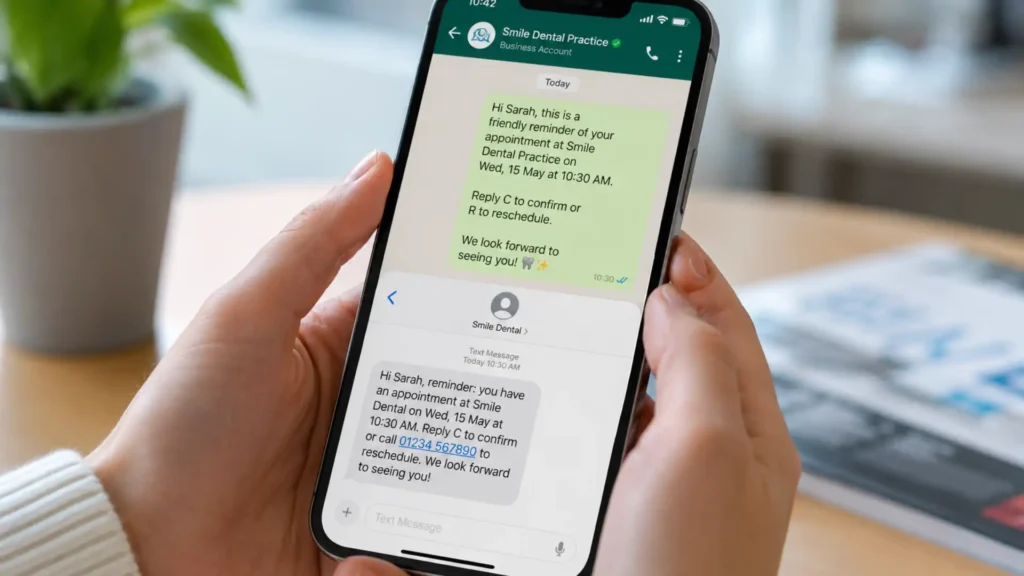
- A series of automated appointment reminders is triggered — perhaps a WhatsApp message two days before, followed by an SMS on the morning of the appointment.
- If the patient cancels, the system offers the freed-up slot to patients on a waiting list and sends a rebooking nudge to the patient who cancelled.
- After the appointment, a follow-up message is sent automatically — checking in on the patient and prompting them to book their next visit.
This level of automation is now achievable for independent practices of all sizes, not just large corporate dental groups. Platforms like the
Fixxable appointment booking system are designed specifically for UK service businesses, including dental clinics, bringing all of these workflows into one connected dashboard.
Online booking integration: meeting patients where they are
The shift to online booking is well underway across the UK health sector. Patients expect the same convenience from their dentist that they get from booking a restaurant or a hotel — they want to choose a time, confirm instantly, and receive a digital record of the appointment.
For dental practices, online booking integration means adding a booking widget to your website and social media pages that connects directly to your live diary. Patients can see real-time availability, select their preferred clinician, and book the appointment type they need — all without picking up the phone.
The benefits for dental practice scheduling are immediate. Your reception team is freed from the phone long enough to focus on patients who are already in the building. Enquiries that come in outside of opening hours are captured and converted into booked appointments automatically. And your diary fills more efficiently because patients self-select the slots that work for them.
For NHS practices in particular, online booking can help manage the challenge of patient access more effectively. With NHS dental access currently under significant pressure across England, a streamlined online booking experience reduces friction and helps practices make the most of every available appointment slot.
Automated appointment reminders: the single biggest tool for reducing no-shows
If there is one area where dental appointment booking automation delivers the clearest return on investment, it is automated appointment reminders. The logic is simple — most patients do not miss appointments because they do not want to attend. They miss them because they forget.
A well-timed reminder removes that barrier entirely. Modern automated reminder systems go far beyond a single SMS the day before. They can send a sequence of messages across multiple channels — WhatsApp, email, and SMS — at intervals that are proven to reduce no-shows most effectively.
Crucially, the best automated appointment reminders are two-way. A patient can reply to confirm, reschedule, or cancel directly from the message. When a cancellation comes through, the system can automatically offer the slot to patients on a waiting list — meaning the chair stays filled rather than sitting empty.
Research across the healthcare sector shows that automated reminder systems can reduce no-show rates by between 10% and 30%. One major healthcare centre achieved a 47% increase in digitally confirmed appointments after introducing an AI scheduling and reminder assistant. For a dental practice losing several appointments a week, even a 15% improvement in attendance can make a meaningful difference to monthly revenue.
Handling cancellations: turning a lost slot into a new booking
Cancellations are an unavoidable part of running a dental practice. The goal is not to eliminate them entirely — it is to respond to them quickly and automatically so that the empty chair time is minimised.
An automated cancellation handling workflow typically works like this. When a patient cancels — whether by replying to a reminder message or calling reception — the system immediately flags the open slot. It then sends a notification to patients on the waiting list, offering them the newly available time. The first patient to respond gets the appointment confirmed instantly.
This approach works particularly well for NHS dental practice scheduling, where demand for appointments consistently outstrips supply. Practices that can fill cancellations within minutes rather than hours retain significantly more chair time and maintain better compliance with UDA targets.
At the same time, automated systems can flag patients who have cancelled more than once and apply a softer follow-up approach — for example, offering a rescheduled appointment proactively rather than waiting for the patient to re-book themselves.
Want to reduce no-shows at your dental practice?
If your team is still spending time on manual reminder calls, there is a better way. Fixxable's dental clinic automation tools combine automated SMS, email, and WhatsApp reminders with two-way messaging — so patients can confirm or reschedule with a single tap, and your diary stays full. Get in touch with our team to find out how we can set this up for your practice.
Rebooking nudges: keeping patients returning to your practice
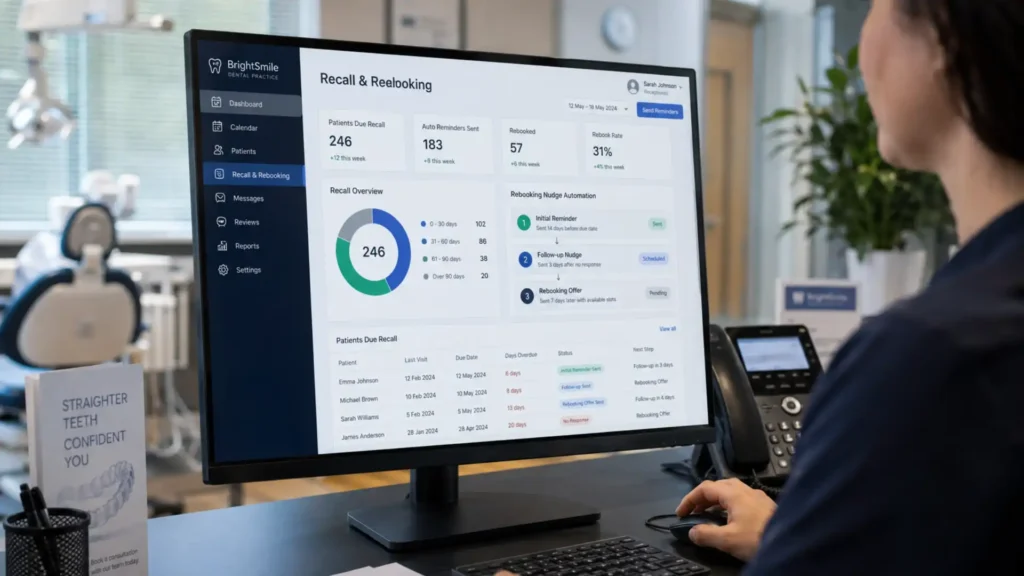
Patient recall is one of the most underused revenue opportunities in UK dentistry. Every practice has a database of patients who are overdue for a hygiene appointment, a check-up, or a treatment they expressed interest in but never completed. Manually identifying and contacting these patients is time-consuming and rarely done consistently.
Dental appointment booking automation solves this through intelligent rebooking nudges. By connecting your booking system to your patient records, the software can automatically identify patients who are overdue and send them a personalised message prompting them to book their next visit.
For private practices, this is particularly powerful. A patient who receives a well-timed, friendly reminder about an overdue hygiene appointment is far more likely to book than one who hears nothing and gradually drifts to a competitor. The global AI in dentistry market is growing at over 21% per year in part because practices are discovering the measurable impact of automated patient recall on long-term revenue.
Rebooking nudge sequences can be configured to match the specific needs of NHS and private dental practices. For NHS patients, the focus might be on routine six-month check-ups and hygiene visits. For private patients, the sequence can also include prompts about cosmetic treatments, orthodontic consultations, or incomplete treatment plans.
An effective rebooking strategy does not just recover lost appointments — it builds the kind of consistent patient relationship that keeps your diary full month after month. Platforms such as
Fixxable’s email marketing automation make it straightforward to build these sequences once and let them run automatically in the background, without any manual input from your team.
NHS vs private dental practices: key differences in automation approach
While the core principles of dental appointment booking automation apply to both NHS and private practices, there are some important differences in how the workflows should be configured.
For NHS practices, the priority is usually managing high patient volumes efficiently, maintaining compliance with NHS contract requirements, and filling cancellations quickly to protect UDA delivery. Automated reminders and waitlist management are especially valuable here, as is the ability to track appointment completion rates against contractual targets.
For private practices, the focus shifts towards revenue per patient. Dental practice scheduling in a private context benefits from automation that supports upsell opportunities — for example, automated follow-ups after a check-up that mention whitening treatments or Invisalign consultations. Payment automation, online deposits at the point of booking, and post-treatment feedback requests also play a larger role in the private practice workflow.
Mixed NHS and private practices face a more complex challenge — managing two patient populations with different expectations and booking behaviours from the same system. The right automation platform should allow you to segment patients and apply different communication sequences depending on their treatment type and payment status.
GDPR compliance for dental booking automation in the UK
- A valid lawful basis for processing patient data under UK GDPR Article 6, alongside a compliant Article 9 condition for special category health data.
- Transparent communication to patients about how automation tools interact with their data.
- A Data Protection Impact Assessment (DPIA) completed before deploying AI systems that process health data at scale.
- Data Processing Agreements in place with any third-party automation vendors.
- Robust encryption, access controls, and audit logs built into the platform.
How to get started with dental appointment booking automation
Getting started does not need to be a large project. The most effective approach is to start with the automation that delivers the fastest return and layer in more complexity as your team gains confidence.
A practical three-step starting framework:
- Audit your current patient journey. Map out exactly how patients currently book, receive reminders, and are followed up. Identify where enquiries are being lost and where no-shows are most common.
- Prioritise automated appointment reminders. This is typically the lowest-complexity automation with the highest immediate impact. A good reminder sequence can reduce no-shows by 10–30% within the first few weeks.
- Integrate online booking and rebooking workflows. Once reminders are in place, connect your online booking widget and build out your cancellation handling and recall sequences.
The key is choosing a platform that brings all of these tools together in one place, rather than stitching together multiple separate systems. A connected platform means your dental practice scheduling data flows seamlessly between booking, reminders, and patient records — giving your team full visibility without the manual admin.
Ready to automate your dental practice bookings?
Dental appointment booking automation is no longer a luxury for large corporate groups. It is a practical, affordable way for independent and mixed NHS and private practices to reduce no-shows, fill cancellations faster, and build lasting patient relationships — all with less manual effort from your team.
Fixxable brings together online booking, automated appointment reminders, CRM, and patient communication tools in one connected UK platform. We will set everything up for you and connect it to your existing systems, so your practice can start seeing results quickly.