
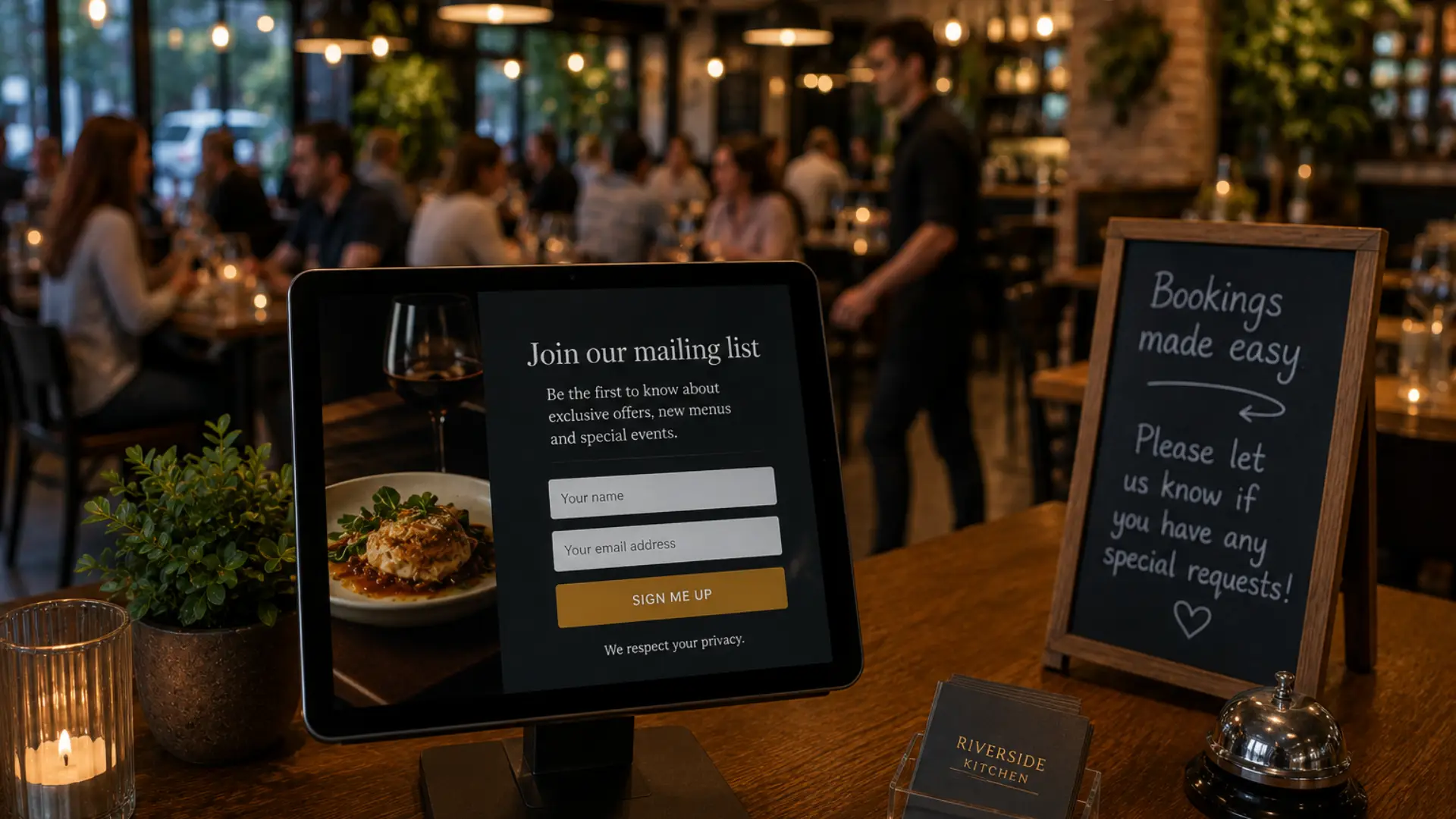
How to grow your restaurant email list and fill quiet nights
Building a strong restaurant email list is one of the simplest ways to turn empty tables into full ones. When you own the contact details of your regulars, you control who hears about tonight’s offer, not an algorithm. This guide shows you how to capture emails at the right moments and use email marketing automation to turn your quietest nights into some of your busiest.
Why a restaurant email list beats chasing social media reach
Social platforms decide who sees your posts, and that reach can shrink overnight without warning. A restaurant email list works differently. Every address on it belongs to you, not a platform, and it stays reachable however the algorithms change.
That ownership matters most when a Tuesday looks empty. Instead of hoping a post gets seen, you can message the diners most likely to book, at the moment you need seats filled. A well-kept restaurant email list becomes a direct line to people who already enjoy eating with you.
Quiet nights are rarely a marketing problem so much as a timing problem: the offer that would have filled the room never reached the right inbox at the right moment. A restaurant email list solves that by putting you back in control of when, and to whom, a quiet-night offer gets sent.
Capture diner details at the point of booking
The booking moment is the easiest place to grow a restaurant email list, because the diner is already giving you their details anyway. A simple checkbox on the reservation form, phrased as an invitation rather than a chore, converts far better than a generic newsletter sign-up.
Keep the ask small: a name, an email address, and a clear reason to say yes, such as early access to seasonal menus or a first-visit treat. Pairing this with capturing details at the point of booking means every new reservation automatically feeds your growing list, with no extra admin for your team.
Ask once, use it well
Diners will not mind sharing an email address if they can see exactly what they will get from it. Say so on the form itself: “Join our list for quiet-night offers and new menu previews.”
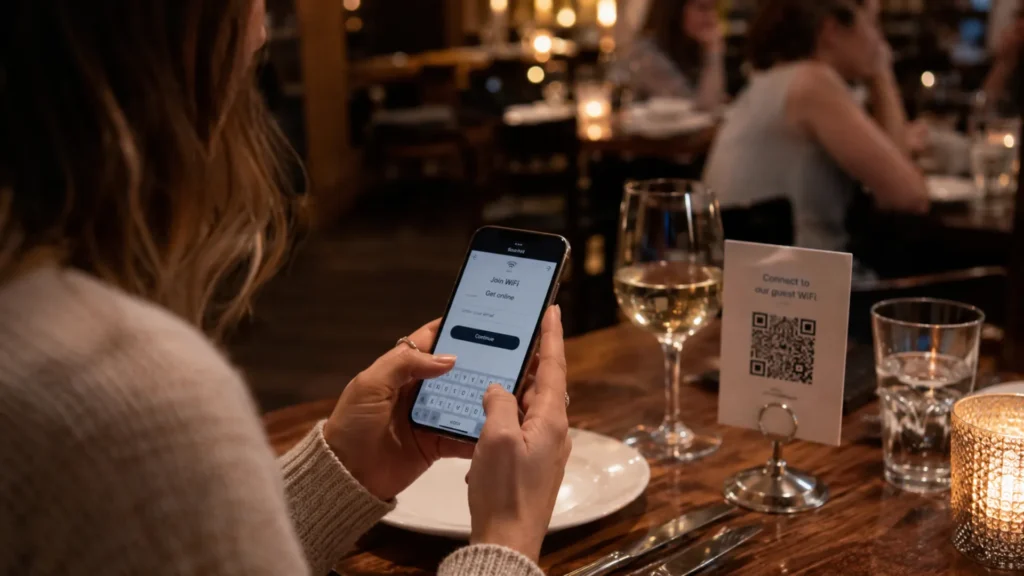
Turn your WiFi login into a growing restaurant email list
Guest WiFi is one of the most overlooked tools for building a restaurant email list. Most diners connect within minutes of sitting down, which makes the login screen a natural, low-friction place to ask for an email address in exchange for instant access.
Set the incentive clearly on the login page itself: a small discount on their next visit, or first look at a new tasting menu. Because the exchange is instant and useful, opt-in rates from WiFi capture are usually higher than from a standalone sign-up form, and every table becomes another entry point into your restaurant email list.
Build an email marketing automation strategy that works while you sleep
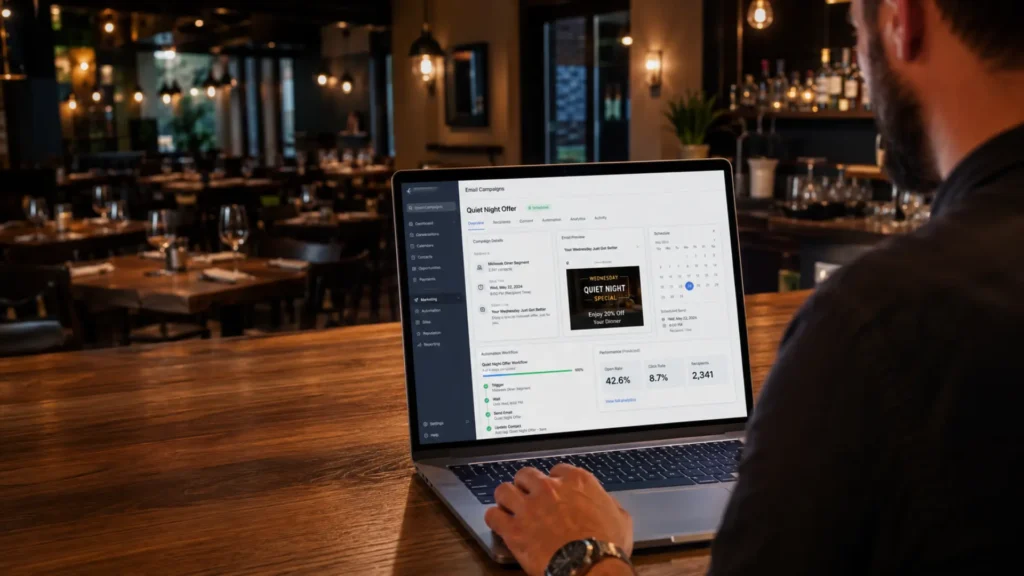
Once diners are on your restaurant email list, email marketing automation is what turns those addresses into midweek bookings without someone manually writing a campaign every time trade is slow. Instead of remembering to send an offer on a quiet Monday, rules you set once keep working in the background.
A basic email marketing automation setup for a restaurant might include a welcome message with a small thank-you offer, a monthly highlight of seasonal dishes, and a “we saved you a seat” nudge to guests who have not booked in a while. None of these need writing from scratch each week once the logic is in place.
Fixxable’s email marketing automation tools trigger these sends based on what a guest actually does, such as booking, visiting, or going quiet, rather than a fixed calendar. That keeps messages timely instead of generic, which is exactly what gets a hesitant diner to book a Tuesday table.
Ready to stop guessing which nights need help?
If Tuesdays and Wednesdays are quietly costing you covers, it is worth mapping out exactly where your slow points are before you start emailing anyone. Our team can walk through your booking patterns with our team and show you where automated offers would make the biggest difference.
Segment your restaurant email list so quiet-night offers land well
Not every offer suits every diner, and sending the same message to your whole restaurant email list wastes the goodwill you worked to build. Segmentation means splitting your list into smaller groups so each one gets something genuinely relevant.
A restaurant-friendly way to group contacts:
- By visit frequency, so regulars get loyalty perks and first-timers get a warm welcome offer
- By typical booking day, so weekday guests receive midweek promotions instead of weekend ones
- By party size, so families and couples see offers that actually fit their table
- By dietary notes, so vegetarian or allergen-specific diners get relevant menu news
Keeping this information organised in one CRM system means your team can see visit history and preferences at a glance, rather than trying to remember which guests prefer which nights.
What to send to fill restaurant quiet nights
Once your restaurant email list is segmented, the content itself is what earns the click. The best-performing emails for quiet nights tend to be short, specific, and easy to act on straight away, rather than a long round-up of everything happening at the restaurant that month.
Think about what would make you book a table on a slow Tuesday, then write toward that single reason instead of trying to cover every offer at once. One clear idea, sent to the right segment, consistently outperforms a crowded newsletter when the goal is filling quiet nights fast.
Ideas that consistently bring diners in on slow nights:
- A midweek offer aimed squarely at your slowest service, such as “Half-price starters, Tuesday only”
- A seasonal dish preview with one strong photo and a short story about the ingredients
- An event invitation, such as live music, a tasting night, or a themed evening
- A simple “we saved you a seat” message to guests who have not visited recently
- A loyalty nudge for regulars who are close to earning a reward
Each of these works best when it is sent to the segment most likely to respond, rather than blasted to your entire restaurant email list at once.
Staying compliant while you grow your list
Collecting email addresses at booking or over WiFi still counts as direct marketing, so consent has to be clear and properly recorded, not assumed. The UK rules on electronic marketing consent set out exactly when an opt-in box is required and how consent should be documented.
In practice, this means using a genuine opt-in checkbox rather than a pre-ticked box, explaining what guests are signing up for, and making it just as easy to unsubscribe as it was to join. A restaurant email list built on clear consent also tends to perform better, since everyone on it actually wants to hear from you.
Common mistakes that stall restaurant email list growth
A few habits quietly hold restaurants back from building a useful list:
- Asking for an email address without saying what the guest gets in return
- Sending every offer to the whole list instead of the diners it actually suits
- Letting the list sit unused between big holiday campaigns
- Making unsubscribing harder than it needs to be, which damages trust
- Relying on one capture point, such as only the booking form, instead of several
Fixing even one or two of these is usually enough to see steady, ongoing growth in your restaurant email list rather than occasional spikes around holidays.
Ready to fill your quiet nights with the right diners?
A restaurant email list only pays off once it is captured consistently and put to work with email marketing automation that runs without daily effort from your team. Fixxable brings booking capture, guest data, and automated campaigns together in one place, so quiet-night promotions go out on their own.