
How to reduce physio no-shows without calling every patient
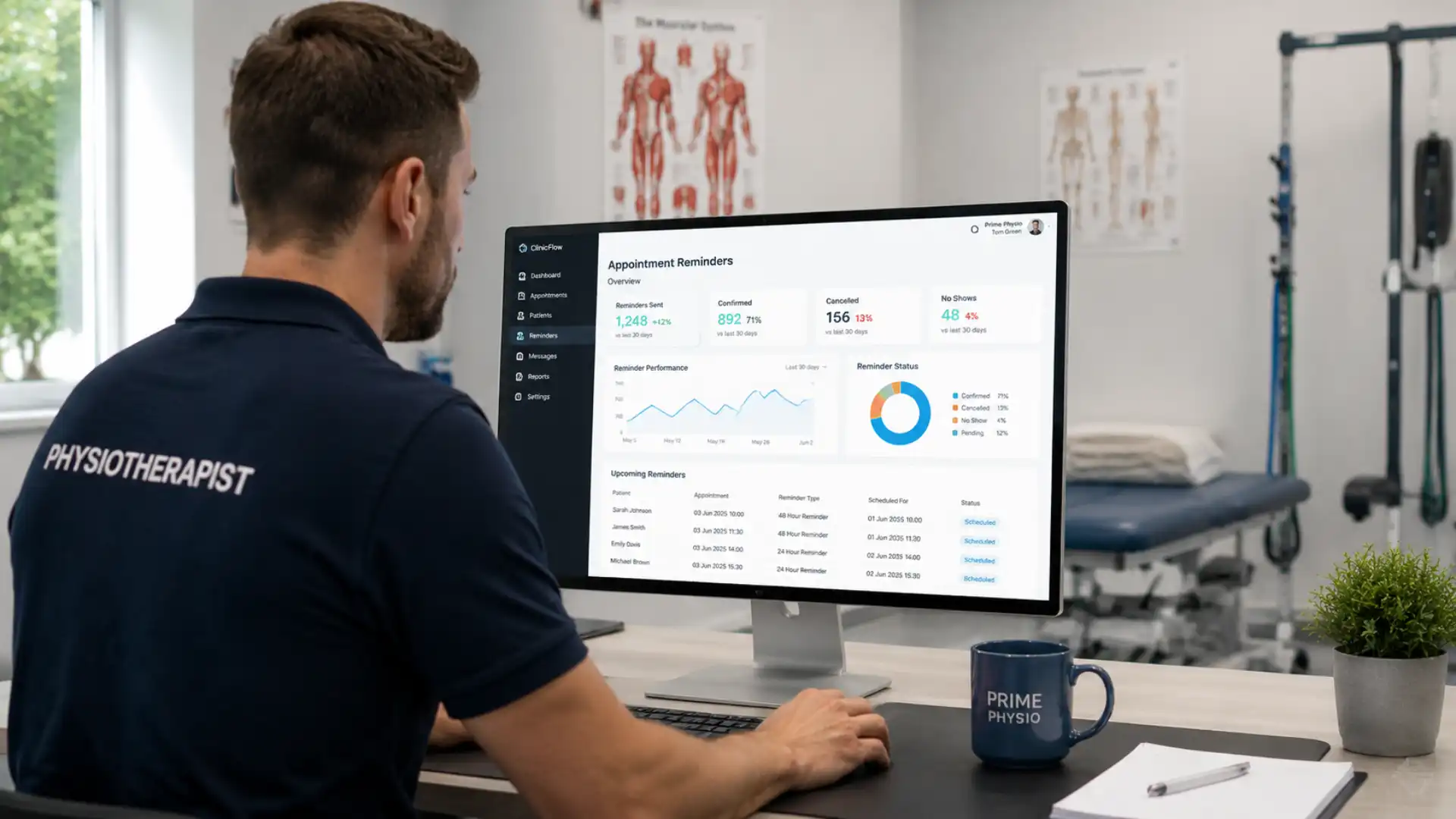
Every physio clinic deals with no-shows. A patient books in, life gets in the way, and the slot sits empty. The traditional fix — calling every patient to confirm — takes up staff time that could be spent on care. The good news is that you can reduce physio no-shows significantly without picking up the phone once.
The answer lies in well-timed SMS appointment reminders and physiotherapy appointment automation. When your reminder sequences are set up correctly, patients confirm, reschedule, or cancel well in advance — giving your team the information they need to keep the diary full.
This guide walks through the practical steps UK physio clinics can take to cut missed appointments, protect revenue, and keep treatment plans on track.
Why no-shows are a bigger problem than most clinics realise
A missed physio appointment is not just an inconvenience. It represents lost revenue, a wasted slot that could have gone to a patient on the waiting list, and a disruption to the patient’s own recovery journey. For NHS referral clinics, it can also affect the metrics used to measure service performance.
The pattern tends to repeat. Patients who miss one session are statistically more likely to drop off their treatment plan entirely. That makes the first no-show one of the most important moments to respond to — and the best way to prevent it is to stop it happening in the first place.
Most no-shows are not deliberate. Research consistently points to forgetfulness, scheduling conflicts, and a lack of a timely nudge as the main culprits. That means the solution is largely communicative — and that is exactly what physiotherapy appointment automation is built for.
The problem with relying on phone calls
Calling patients to confirm appointments is time-consuming and often ineffective. Staff may leave voicemails that go unheard, call during working hours when patients are unavailable, or spend ten minutes per call on a task that should take seconds.
It also creates an inconsistent experience. If a receptionist is busy or absent, confirmations do not go out. That inconsistency is precisely where no-shows creep in.
SMS appointment reminders solve this entirely. They are sent automatically at pre-set intervals, they reach patients directly on their mobile phones, and they require no staff input once the sequences are configured. The message arrives at the right time, every time.
How SMS-led reminder sequences work for physio clinics
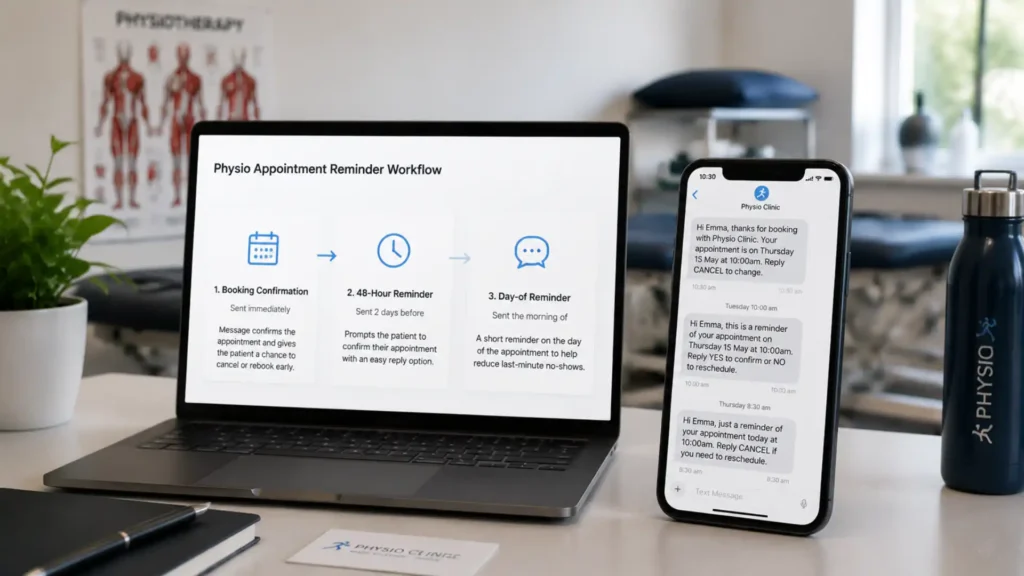
A well-designed physiotherapy appointment automation sequence typically runs across three touchpoints.
- Confirmation message at the point of booking — acknowledges the appointment and gives the patient a chance to cancel or rebook early.
- 48-hour reminder — the most important message in the sequence. Sent two days before the appointment, it prompts the patient to confirm and includes an easy reply option.
- Day-of reminder — a short morning message on the day of the appointment. Brief, clear, and effective for reducing last-minute no-shows.
Each message can include a one-tap confirmation link or a reply keyword such as YES to confirm or NO to cancel or reschedule. This shifts the work away from your front desk entirely. If a patient replies NO at 9pm two days before their appointment, your team sees that the following morning and can fill the slot — something that would never happen with a phone-call-only system.
For NHS referral workflows, where appointment windows can be weeks apart, the 48-hour message is particularly valuable. Patients booked in several weeks ago may have forgotten the appointment or had a change in circumstances. The reminder gives them a prompt — and you a window to respond.
Designing messages around physiotherapy appointment pattern
Generic reminder templates do not perform as well as messages tailored to your patient base. Physiotherapy appointments carry specific characteristics that are worth building into your messaging.
Patients recovering from injury or surgery often have multiple weekly appointments. For these patients, daily reminders would feel intrusive. The automation should recognise the session frequency and adjust the messaging cadence accordingly — perhaps a single 24-hour reminder rather than a three-message sequence.
NHS referral patients, on the other hand, often have longer gaps between sessions and less familiarity with the clinic. These patients benefit from an additional educational element in the reminder — brief information about what to bring, how to prepare, or where to arrive. It reduces the anxiety that can lead to a no-show and builds confidence in attending.
Private physio patients respond well to messages that reinforce the value of consistency. A reminder that notes how many sessions they have completed or encourages them to continue their recovery programme can nudge attendance without feeling pushy.
Could automated reminders work for your physio clinic?
Setting up your first reminder sequence takes minutes with the right platform. Fixxable's physiotherapy automation tools let you build custom SMS workflows designed around your appointment patterns — no technical knowledge needed. Speak to our team about automating your physio clinic reminders and see how quickly no-show rates can fall.
Getting confirmation replies — and acting on them
The reminder is only half of the equation. The other half is what happens when a patient does not confirm.
Physiotherapy appointment automation allows you to set follow-up rules based on patient responses. If a patient has not replied to a 48-hour reminder by a set time — say, 36 hours before the appointment — the system can send a second, shorter message. This escalation step alone catches a significant number of additional confirmations.
When a patient does cancel via SMS, the workflow can immediately trigger a rebooking message offering available slots. This keeps the patient in the treatment cycle and recovers the time for another patient. The whole loop runs without any staff involvement.
Building these confirmation workflows is straightforward with a platform that supports two-way SMS. Fixxable’s WhatsApp and SMS marketing tools are designed to handle exactly this kind of two-way interaction, allowing patients to reply directly and your system to respond intelligently.
Beyond reminders — other automation tactics that reduce no-shows
SMS appointment reminders are the most impactful single change most clinics can make, but they work even better as part of a wider physiotherapy appointment automation strategy.
Online booking and self-scheduling
Patients who book their own appointment choose a time that suits them, making them considerably more likely to attend. A self-booking system integrated with your clinic calendar removes the need for phone-based booking and reduces the friction that leads to forgotten or inconvenient slots. Fixxable’s appointment booking system supports this workflow natively, syncing directly with your team’s availability.
Automated cancellation handling
When a patient cancels, the instinct is to call them back to rebook. Automation removes that dependency. A cancellation can trigger an instant SMS offering the next available slot, asking whether they would like to reschedule. Many patients who would not have thought to rebook will respond to a prompt — keeping your clinic full without your front desk chasing anyone.
Post-session follow-ups that build attendance habits
Sending a brief follow-up message after a session — acknowledging the appointment and referencing the next one — reinforces the patient’s commitment to their treatment plan. This is particularly effective for patients early in a course of treatment when attendance habits have not yet formed.
Research published by the NHS England Patient Experience Team highlights that patients who feel consistently engaged with their care provider are significantly more likely to complete their treatment course. Automated touchpoints contribute meaningfully to that sense of engagement.
What to look for in a physio reminder platform
Not all automation platforms are built with physiotherapy workflows in mind. When choosing a system to help you reduce physio no-shows, the following features matter most.
- Two-way SMS — patients must be able to reply to confirm or cancel, and the system must act on those replies automatically.
- Custom message timing — you need to control when reminders go out based on appointment type, session frequency, and patient profile.
- NHS referral compatibility — if you work with NHS-referred patients, the system should support the longer lead times and different communication needs of that cohort.
- Rebooking automation — a cancelled appointment should trigger an immediate rebooking offer, not a note for your receptionist to follow up on Monday.
- GDPR compliance — all patient data must be handled in line with UK GDPR, with messages stored securely and consent managed appropriately.
Fixxable’s platform is built specifically for UK service businesses, including physiotherapy clinic automation, and meets all of the above criteria out of the box.
A realistic timeline — what to expect when you automate
Most clinics see a measurable reduction in no-show rates within the first month of running automated SMS reminder sequences. The first two weeks are typically an adjustment period — patients get used to receiving messages and some may not engage with them immediately.
By weeks three and four, confirmation rates usually climb significantly. Front desk staff notice the change quickly because the reactive calls they used to make start disappearing from the daily task list.
Over the following months, the data becomes increasingly useful. You can see which message templates perform best, which appointment types have the highest no-show rates, and whether certain patient segments need different sequencing. That insight allows you to continue refining the automation rather than treating it as a set-and-forget tool.
The long-term goal is to reach a position where your diary is reliably full, your team is not spending time on confirmation calls, and patients are completing their treatment plans consistently — all because the right message reached the right person at the right time.
Ready to reduce physio no-shows with smart automation?
Fixxable's physiotherapy appointment automation platform is designed for UK clinics that want to protect their diaries, improve patient attendance, and stop wasting time on manual confirmation calls. SMS appointment reminders, two-way confirmation, and rebooking workflows are all included — and can be live within days.