
Stop losing customers to voicemail: how instant text-back automation wins back lost business
Missed call text back automation is no longer a nice-to-have for UK small businesses — it’s one of the simplest ways to stop revenue from slipping away. Every time a call goes unanswered and nothing follows, a potential customer moves on. They don’t leave a voicemail. They call the next number on their list.
The good news is that this problem has a straightforward fix. An instant text-back system responds to every missed call within seconds, keeping the conversation alive before the caller has even put their phone down.
This guide covers exactly how missed call text back automation works, why it matters for small businesses across the UK, and how to get more from it when it’s combined with a proper follow-up system.
Why missed calls are costing your business more than you think
Most business owners know that missed calls aren’t ideal. What they often don’t realise is just how frequently those missed calls result in permanently lost customers.
Research consistently shows that around 85% of callers who don’t reach a business will not try again. They’re not waiting. They’re moving on. In service-based industries like trades, healthcare, legal, and beauty, this behaviour is even more pronounced because the urgency to solve a problem drives people to whoever responds first.
The pattern usually looks like this: a call comes in during a busy moment, it goes to voicemail, the caller hears the automated message, and then nothing. No reply. No follow-up. The lead is gone.
Add that up across a working week and the figure becomes significant. Missing even a handful of high-value enquiries per month — whether you’re a builder, a dentist, or an estate agent — can represent thousands of pounds in lost revenue.
The voicemail problem nobody is talking about
Voicemail feels like a safety net but it rarely catches anything. The majority of callers simply won’t leave one. They don’t want to wait for a beep, construct a message, and then sit around hoping someone calls back. It feels effortful, and for a lot of people, it feels pointless.
What callers actually want is a conversation — or at least an acknowledgement that their call was received. Text messaging provides exactly that, and it does so in the channel most people check dozens of times per day.
How missed call text back automation actually works
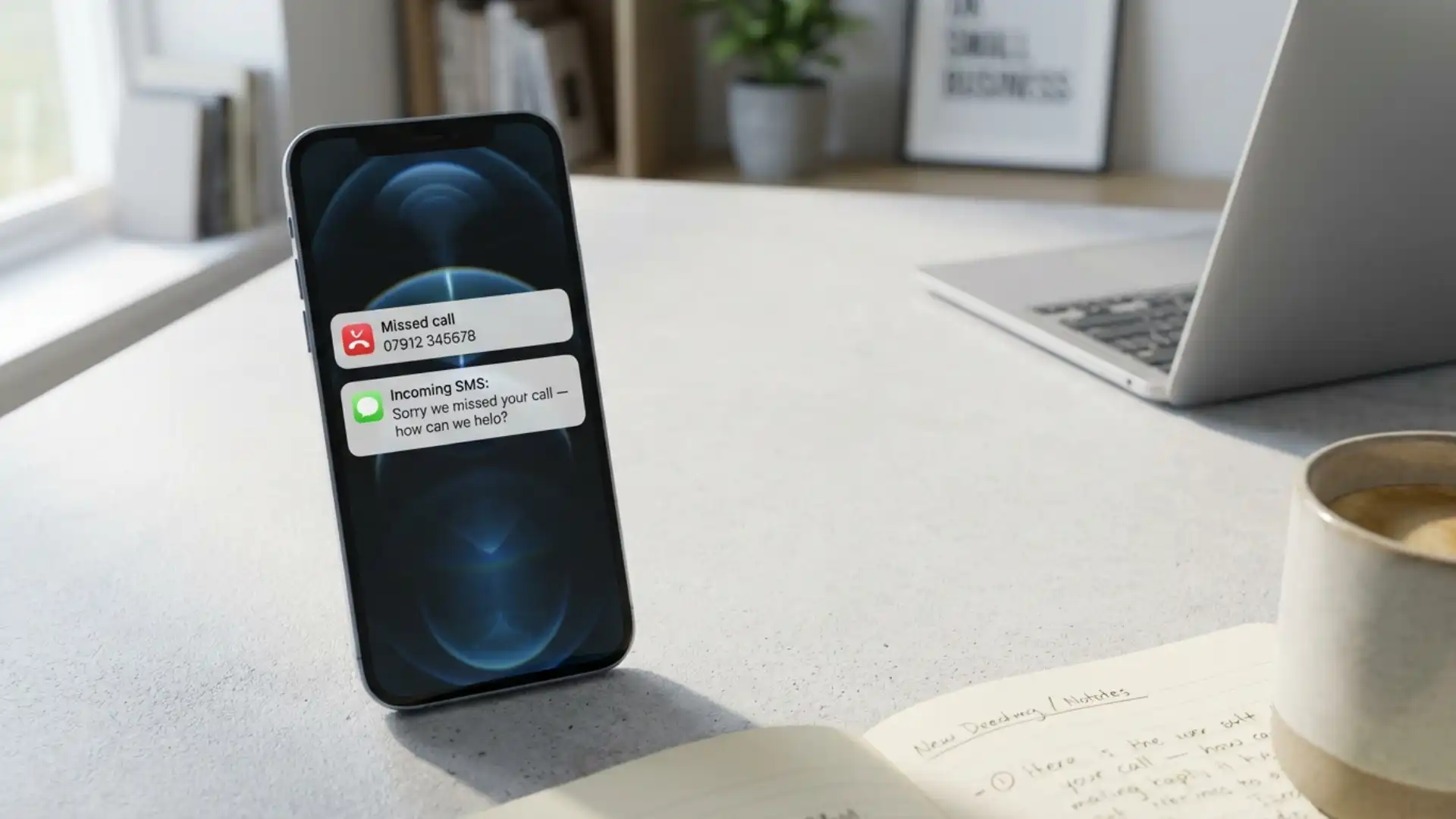
Missed call text back automation is a system that detects when a call goes unanswered and immediately sends an SMS to the caller’s number. The whole process happens within seconds — before the caller has had a chance to search for a competitor.
The message is short, friendly, and to the point. Something along the lines of: “Sorry we missed your call — how can we help? Just reply to this message.” That’s often enough to start a two-way conversation that converts into a booking or sale.
Because SMS messages carry a 98% open rate and most are read within three minutes, the chances of re-engaging a missed caller are dramatically higher than hoping they’ll ring back or stumble across your voicemail.
What happens after the first message
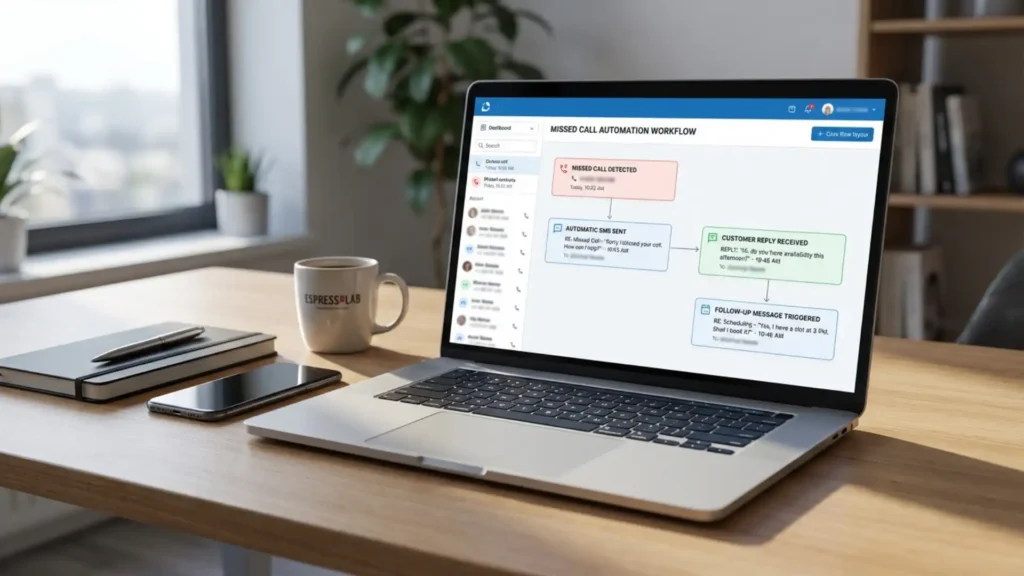
A single automated reply is a good start, but the real value comes from what happens next. Once a caller responds, their message is captured inside your system and routed for follow-up — either to a team member or through a further automation sequence.
Depending on how the system is set up, you can send booking links, ask qualifying questions, or trigger reminders if there’s no reply after a set period. This turns a missed call into a structured conversation rather than a one-off text exchange.
Pairing this with your broader SMS and messaging setup gives you a genuinely joined-up follow-up process. Fixxable’s WhatsApp and SMS marketing tools let you build exactly this kind of structured, automated communication flow, so no lead gets left in limbo after that first contact.
The speed-to-lead advantage: why seconds matter
Speed to lead is the time between when a customer makes contact and when they receive a response. Research from InsideSales.com and MIT’s Lead Response Management Study found that responding within five minutes can increase lead qualification rates significantly — and that waiting longer than a few minutes dramatically reduces your chances.
This isn’t just a metric. It reflects real human behaviour. When someone picks up the phone to call a business, they’re in a decision-making mindset. They’re ready to act. A response that arrives within seconds catches them in that moment. A response that comes two hours later — or doesn’t come at all — catches them after they’ve already booked elsewhere.
Instant text-back automation solves this problem completely. It doesn’t matter whether your team is on another call, on a job site, or it’s three in the morning. The system responds immediately, every time.
Real businesses where this makes a difference
This kind of automation is valuable across almost any service-based business, but it’s particularly impactful for:
- Builders and tradespeople who are often on-site and unable to answer incoming calls during working hours
- Dental and medical practices where reception teams are frequently occupied with in-person patients
- Estate agents where responding first to a viewing enquiry can make the difference between winning and losing a sale
- Beauty and wellness businesses with small teams where every member of staff is usually with a client
- Legal and insurance firms where a delayed response can cause a potential client to instinctively lose confidence
Missing calls and losing enquiries?
See how instant text-back automation replies within seconds, keeps the conversation alive, and helps small businesses recover leads automatically.
What makes a good instant text-back message
The message itself matters. A generic or robotic-sounding reply can do more harm than good if it makes the caller feel like they’ve been processed rather than acknowledged.
A strong missed call text should do four things: use your business name, acknowledge the missed call, invite a reply, and give the caller an easy next step. Keeping it under 160 characters means it arrives as a single SMS rather than being split.
Here are a few examples that work well:
- “Hi, this is [Business Name]. Sorry we missed your call! How can we help? Just reply to this message and we’ll be back to you shortly.”
- “Thanks for calling [Business Name]. We’re with a customer right now but don’t want to miss you — what do you need? Reply STOP to opt out.”
- “We just missed your call at [Business Name]. Need something urgently? Reply here and we’ll get back to you ASAP. Reply STOP to opt out.”
Notice that each message stays conversational. There’s no sales pitch. No pressure. Just a simple, human acknowledgement that opens the door to a conversation.
After-hours messages deserve their own template
Calls that come in outside business hours are worth handling separately. A slightly different message that sets clear expectations — “We’re currently closed but got your call. We’ll be in touch first thing tomorrow” — tends to reduce frustration and keep the caller on side.
The key is that they still receive something. Silence after an after-hours call leaves callers assuming you simply don’t care. A prompt, friendly reply signals that you’re organised and responsive, even when you’re not physically available.
Tracking performance so you can see what's working
Automation is only as useful as the data it generates. A good missed call text back system should give you clear visibility into how many calls were missed, how many automated texts were sent, and how many callers actually replied.
These figures help you understand where leads are coming from, what time of day demand peaks, and whether your message templates are generating replies or being ignored. Over time, that data informs decisions about staffing, messaging, and follow-up sequences.
Fixxable’s call tracking features log every missed call automatically, so nothing disappears into the void. You can see at a glance how many potential conversations were recovered by the text-back system and how each one progressed from there.
Going further: combining text-back with a full SMS marketing system
Missed call text back automation works on its own. But when it’s part of a broader messaging strategy, the results improve significantly.
Think of the text-back as the first step in a conversation. What happens after someone replies? Do they get a booking link? Is a follow-up sent if they go quiet? Does their response get logged against a contact record so your team has context before they call back?
Businesses that build these connected follow-up flows around their missed call automation recover more leads and convert them at a higher rate. The initial reply catches the caller’s attention. The follow-up sequence keeps it.
Fixxable’s voice agents and missed call text back feature is built for exactly this kind of joined-up approach — capturing every missed call automatically and triggering the right response without any manual intervention. You can explore how it works in detail on the voice agents and missed call text back page.
Compliance and best practice for SMS replies in the UK
Sending automated text messages to people who have called your business is generally considered compliant because the contact was initiated by the caller. That said, there are a few straightforward rules worth following.
- Always include your business name so the recipient knows who is contacting them
- Keep the message transactional — this is a response to their call, not a sales broadcast
- Include an opt-out option such as “Reply STOP to opt out” on every message
- Avoid sending multiple automated messages to the same number in quick succession
- Follow ICO guidance on electronic marketing and data handling
These practices protect your business and also tend to result in better response rates, since callers are more likely to engage with messages that feel professional and considerate.
Is text-back automation right for your business?
If your business receives inbound calls and your team isn’t able to answer all of them — which applies to virtually every small business in the UK — then missed call text back automation will recover leads you’re currently losing.
The cost of most text-back systems is modest, typically ranging from around £50 to a few hundred pounds per month depending on the platform and features included. Even recovering a single additional job or booking per month often justifies the spend.
The businesses that benefit most are those in high-intent service industries where callers are ready to act and won’t wait long for a response. But the principle applies broadly. If you’re running paid advertising, investing in SEO, or relying on referrals to bring people to the phone — you want to make sure those calls are being caught.
For businesses that also want to scale their follow-up beyond text messages, pairing this with a solid WhatsApp and SMS marketing setup means every touchpoint — from the first missed call right through to post-service follow-up — is handled automatically and consistently.
Where to learn more about response time and lead conversion
For a deeper look at the data behind speed-to-lead and its effect on conversion rates, Campaign Monitor’s research on SMS open rates and engagement offers a useful overview of why text messaging outperforms other follow-up channels for time-sensitive business communication.
Keeping every missed call connected to your wider business
One of the clearest advantages of using an integrated platform for missed call text back is that every conversation stays connected. Replies from callers are logged against a contact record. Your team can pick up any conversation with full context. No lead disappears because someone forgot to call back.
Fixxable’s CRM system ties all of this together — missed call logs, text replies, follow-up sequences, and customer records — so your business has a complete picture of every enquiry, from first contact to conversion.
Final thoughts
Missed call text back automation is one of those rare tools that solves a real problem with minimal effort once it’s set up. It costs relatively little, it runs around the clock, and it actively prevents the kind of silent revenue loss that most businesses don’t even realise is happening.
The businesses that implement it consistently recover more leads, respond faster than their competitors, and build a better impression with callers — simply by showing up in the channel people actually check.
If you’re losing customers to voicemail, the answer isn’t to hire more staff or spend more on advertising. It’s to make sure every call that comes in gets an immediate, professional response — even when you can’t answer the phone yourself.
Stop losing leads when your business misses a call
Missed call text back automation sends an instant SMS when you cannot answer, helping your business recover enquiries, start conversations faster, and win back leads that would otherwise go elsewhere.